• Home
  • Traveling Patagonia
  • Road Trips
  • Nature Expeditions
  • Trekking
    • Day Tours
    • Muti-day Expeditions
  • Birding Tours
    • Day Tours
    • Overnight Tours
    • North Patagonia Birding Tour
    • From the Atlantic Coast to the Andes
  • Logistics
  • Contact Us
  • About
  • Blog
  • Español

Copyright © 2016 Tierras Patagónicas

Cave of the Hands


Cueva de las Manos (Cave of the Hands), on the west of Santa Cruz province, Argentine Patagonia, is one of the most important archeological sites in South America, featuring cave paintings that are the most ancient artistic expressions of the native people of the subcontinent. The site was declared World Heritage by the UNESCO in 1999.


The cave is indeed one of the stone walls of the amazing Pinturas River Canyon, an impressive basaltic formation of 200 m high and 150 Km long made by the erosion produced by the melting of the glaciers during the Pleistocene. The Pinturas River, also called Ecker, has its source on the Andes mountain range and runs northeast across a semi-desert area to join the Deseado River, flowing into the Atlantic Ocean.


Cañón del río Pinturas, Santa Cruz


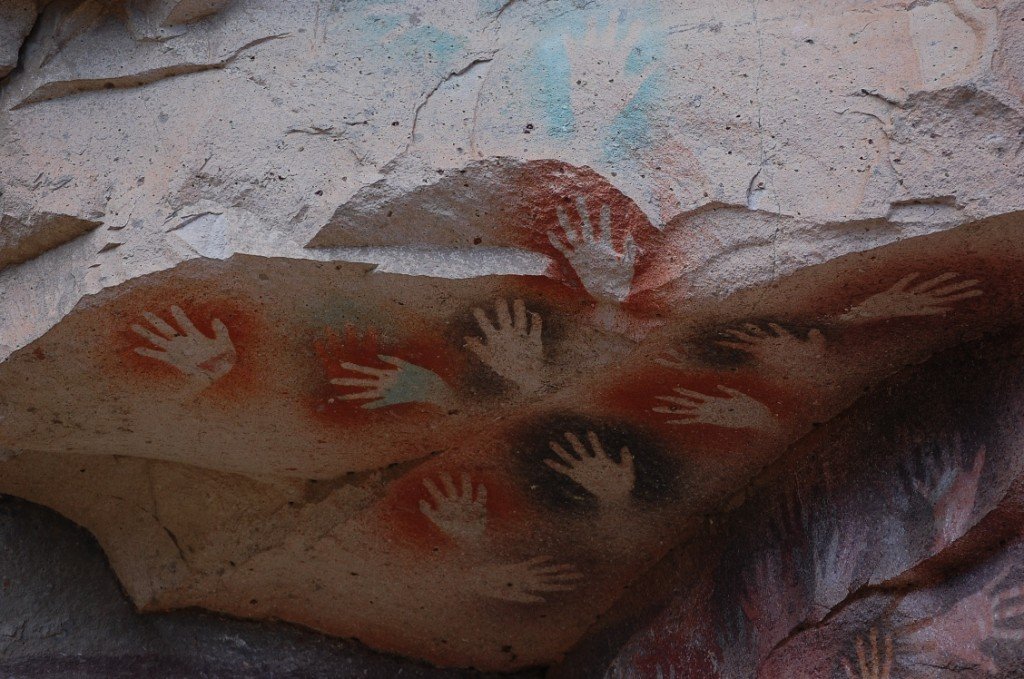
The paintings were done by the firsts settlers of these lands, ancestors of the Tehuelche people (or Patagones), dating back to different periods from 9.300 and 3.300 years ago. The most iconic are the negative silhouettes of hands; there are 829 of these and they were made using airbrush techniques, placing one hand against the wall and blowing the paint using a bone-made spraying pipe. The paints were obtained from rocks, plant and fruits, using blood and grease as agglutinative to get different tonalities like red, ochre, yellow, black and white.


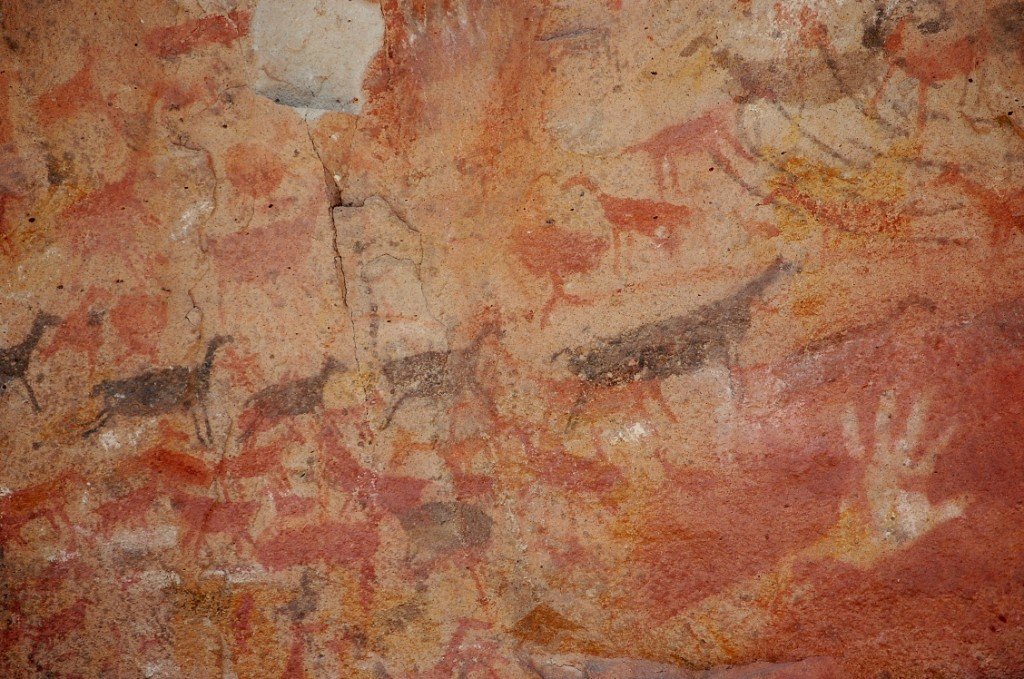
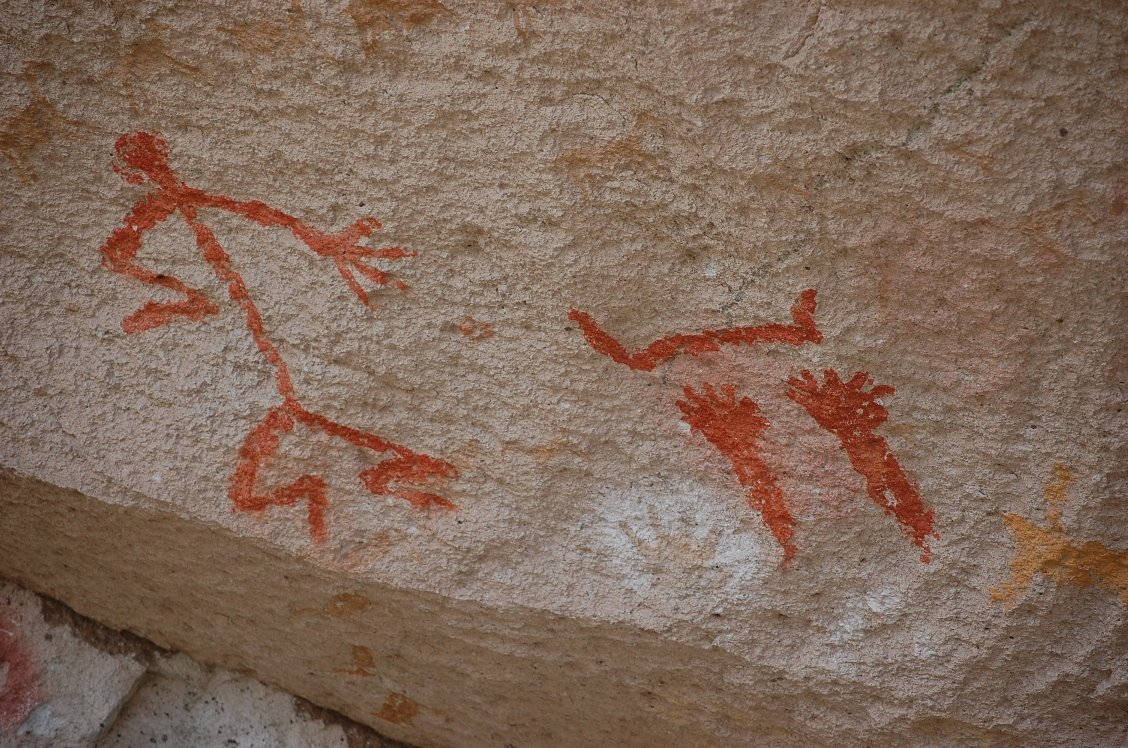
Apart from the hands, other paintings represent haunting scenes, depicting animals like guanacos and choiques together with human figures. On the paintings of the last period there are also reptiles and geometric motifs; their meaning is unclear but they must be related with rituals and ceremonies of a spiritual nature.


Cueva de las Manos, Santa Cruz


The first settlers of these lands were nomad hunter-gatherers that used to live in the area during the less hostile seasons of the year. Their main prey and basis of sustenance was the guanaco: they ate its flesh, drank the blood, wear the furs and leather, and used the bones and tendons to make tools and other objects. The hunting was done by surrounding the animal and taking it down using stones, spears and arrows. They lived in clans of 25 to 30 members, following the guanaco herds during their seasonal movements in order to ensure their subsistence. As a part of their ceremonies they had their hands printed as a sign of passing by the place.


Cueva de las Manos, Santa Cruz


The existence of the cave was first documented by the priest Alberto de Agostini in 1941, when he published several photographs in his book “Los Andes”. After that several archeological studies were made on the place and the authorities started to protect and maintain the cave paintings. Nowadays there is a Visitors Center open during the entire year from where the cave paintings can be visited using a walkway that has been build along the place. The paintings are protected by a metal grille to prevent from despoliations and vandalism. The visit can be made only from the Visitors Center, in small groups and accompanied by a specialized guide.


Cueva de las Manos, Santa Cruz


To get to Cueva de las Manos you have to take the Route 40 from Perito Moreno and cover 54 miles, then take the exit to the Pinturas River Canyon and do 18 miles more by a dirt road across a desert landscape to reach the Visitors Center. You can also do the visit from the estancias Cueva de las Manos and Casa de Piedra, covering the north part of the canyon in a 4×4 vehicle and then walking up to the Visitors Center.


Cañon del río Pinturas


2 Comments for Cave of the Hands


sona Garcia

Apart of the hands the panting represents haunting scene

Reply

Indigenous Peoples of Patagonia (II) | Patagonian Lands

[…] about them from numerous cave paintings spread around Patagonia. The most representative is the Cave of the Hands, in Santa Cruz province, where several guanaco and rhea haunting scenes are […]

Reply


Wanna say something?


  Cancel Reply

  • CONTACT

    info@tierraspatagonicas.com

    Phone: +54 2972 413 786
    Cel: +549 2944 710 762

    San Martín de los Andes
    Patagonia Argentina

  • VIDEOS

  • Photos

    • ANDEAN PATAGONIA
    • SOUTHERN PATAGONIA
    • ATLANTIC PATAGONIA
    • BIRDWATCHING PHOTOGRAPHY
  • Recent Posts

    • Birds of Patagonia: Patagonian Sierra-Finch
      (Phrygilus patagonicus) The Patagonian Sierra-Finch is an endemic species of Patagonia...
    • Pillan Mahuiza Geopark
      Pillán Mahuiza Geopark, in San Martín de los Andes, Patagonia, Argentina, spans...
    • Birds of Patagonia: Silvery Grebe
      (Podiceps occipitalis) This sublime diver and swimmer is found in almost all Argentina,...
  • Popular Posts

    • The Andean-Patagonian Forest
      The Andean-Patagonian forests, also known as Subantarctic forests, spreads over steep...
    • Ruta 40, North and Cuyo Sectors
      Ruta 40 ("Route 40"), or National Route 40 is the longest and most spectacular road...
    • A Tour to The Marble Chapels
      The "Marble Chapels", in General Carrera Lake, Chile, are mineral formations made...

  • Categories

    Antrophology Birdwatching Books Fauna Fungi Geology History Lakes & Rivers Mountains National Parks Native People Paleontology Plants Route 40 Tours Uncategorized Volcanoes