• Home
  • Traveling Patagonia
  • Road Trips
  • Nature Expeditions
  • Trekking
    • Day Tours
    • Muti-day Expeditions
  • Birding Tours
    • Day Tours
    • Overnight Tours
    • North Patagonia Birding Tour
    • From the Atlantic Coast to the Andes
  • Logistics
  • Contact Us
  • About
  • Blog
  • Español

Copyright © 2016 Tierras Patagónicas

Ruta 40, Patagonia


We used our previous post to describe the Ruta 40 part that covers the North and Cuyo regions; on this one we will take you through the Patagonian stretch of this mythical route. Geographers consider Patagonia to comprise all the territory south of Colorado River, so almost half of the mileage of Ruta 40 goes through Patagonian territory. This includes the provinces of Neuquén, Río Negro, Chubut y Santa Cruz.


Neuquén

The route enters north of the Neuquén province coming from Malargüe in Mendoza. In the town of Barrancas the road cuts the Colorado River, which marks the entry in Patagonian territory. Surrounding the Tromen volcano, through an amazing landscape of badlands (called huayquerías, dry terrains where softer sedimentary rocks and clay-rich soils have been extensively eroded by wind and water), the route reaches the town of Chos Malal, a small village founded in 1897 as part of the “Conquest of the Desert“, launched over the mapuche territories by General and later President Julio Argentino Roca. The town features an interesting Historical Provincial Museum that sums up the local history. Chos Malal is also the starting point for the expeditions to Domuyo volcano, of 4,709 m, the highest peak in Patagonia.


The road goes on direction south, across arid lands with red, yellow and green stratums made up by fluvial sediments deposited during the Cretaceous, passing by Las Lajas and Zapala. Zapala is a significant industrial, commercial and touristic center within the province. After Zapala the road continues down to La Rinconada crossroads. The road to the right takes to Route 234 that links the important touristic centers of Junín de los Andes, San Martín de los Andes and Villa La Angostura, the last two in the hearth of the so-called Lake District. Going straight the Route 40 runs to the east to cross the imposing Piedra del Águila reservoir and the Limay River, which is the border with Río Negro province.


Ruta 40, Neuquén, Patagonia Argentina


Río Negro

The route enters Río Negro province crossing the Nahuel Huapí National Park towards San Carlos de Bariloche, the biggest touristic center in Patagonia. The road covers the old Route 258, going around lakes Gutiérrez and Mascardi, with beautiful views to the crests of cerro Catedral Sur. Beside Mascardi Lake there is a small town, Villa Mascardi, which was founded by the National Parks Administration, and has a gas station, a dock over the lake, and a camp site with cabins. From there, taking the Provincial Route 258 you can access to Cerro Tronador, the highest peak within the Nahuel Haupí National Park.

Then the route goes to the town of El Bolsón, located in the middle of one the most beautiful valleys on the southern Andes. It is a small city with a young population of around 20,000, with a great mix of races and cultures and an intense cultural life. There are numerous interesting places and excursions, one of the bests being the trek to the valley and canyon of Azul (Blue) River.


Lago Nahuel Huapí, Bariloche, Patagonia Argentina

Chubut

After passing El Bolsón the route crosses parallel 42° South, which sets the border with the Chubut province. Immediately you arrive to Lago Puelo National Park, the smallest of the entire region, located in the valley of Azul River. Lake Puelo, with its intense turquoise blue waters, takes up a big part of the park. From the lake several paths go through the Valdivian temperate rain forest, some of them heading to Chile.


Then the route passes by Epuyén, where Patagonian Wines, the southernmost vineyard of Argentina is located. Also in Epuyén is the exit to the town of El Maitén, where there is a Museum of the Old Patagonian Express. Following Ruta 40 you reach Esquel, but you can take a detour on RP 71 to pass by Cholila, the place where the mythical bandits Butch Cassidy, Sundance Kid and Etta Place established by the beginning of XX century. From there you enter directly to the amazing Los Alerces National Park, in which, by taking the boats that sail Rivadavia, Menéndez and Futalaufquen lakes you can contemplate alerces (Fitzroya cupressoides) over 2.000 years old.


Ruta 40 then heads to Leleque, where there is a Museum of Patagonia located in the estate of Tierras del Sud Company, which belongs to the Benetton family. Then the road arrives to Esquel, founded during the beginning of XX century over a region occupied by Welsh settlers. Its main touristic attraction is La Trochita, an old Patagonian express of narrow gauge that used to link Río Negro and Chubut provinces, from Esquel to Ingeniero Jacobacci, a trip of 400 Km. Nowadays, only the first 18 Km stage from Esquel to Nahuel Pan (where a native mapuche community lives) is used for touristic purposes.


Ruta 40, Chubut, Patagonia Argentina

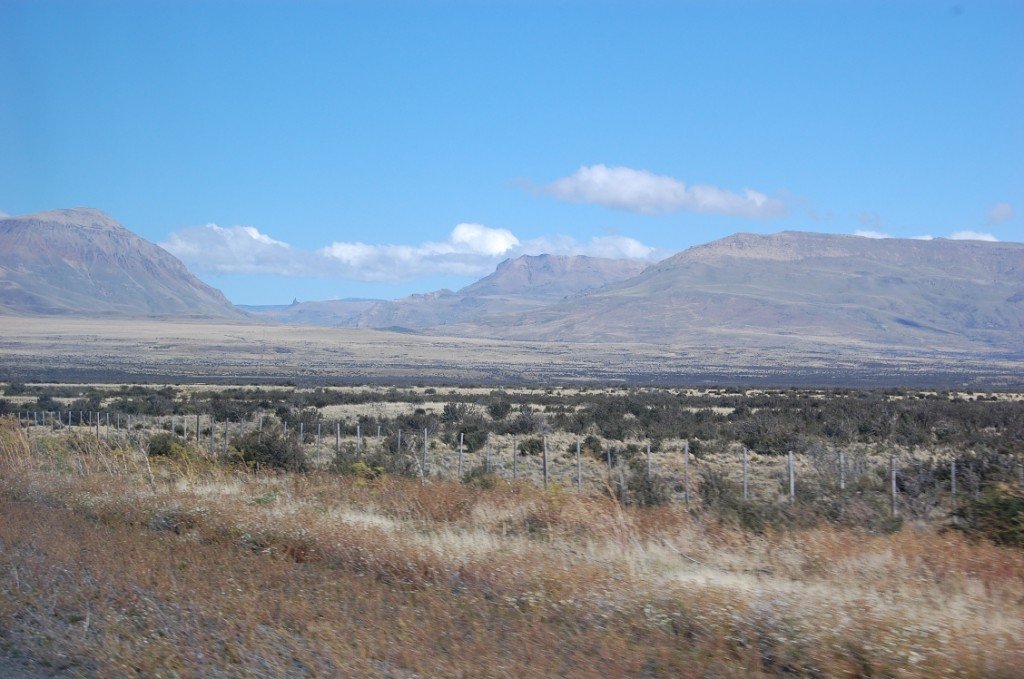
After leaving Esquel and down south to El Calafate, 1,162 Km away, the Route 40 covers it most empty and desolate part, where you get the true sensation of open and virgin space which is characteristic of Patagonia. From there down south there are no towns with populations over 25,000. Many parts of the road are not paved, the distances to the next town of gas station get longer and the supplies and services are more expensive.


The first stage of this solitary route goes by Tecka to arrive to Gobernador Costa. In Tecka there is an exit to National Route 25 that connects with Trelew, in the Atlantic coast, through the magnificent valley of Chubut River. In Gobernador Costa there is a Regional Museum of Cacique Sayhueque, a native mapuche chief on XIX century. Then the road goes on down to Alto Río Senguer, where you can take the exit to Fontana Lake, and to Río Mayo, where the Estacia Don José, known by the raising of Merino sheep and guanacos, is located. After Río Mayo the Route 40 spreads out through and endless straight unpaved road until crossing parallel 46⁰ which is the border between Chubut and Santa Cruz provinces.

Santa Cruz

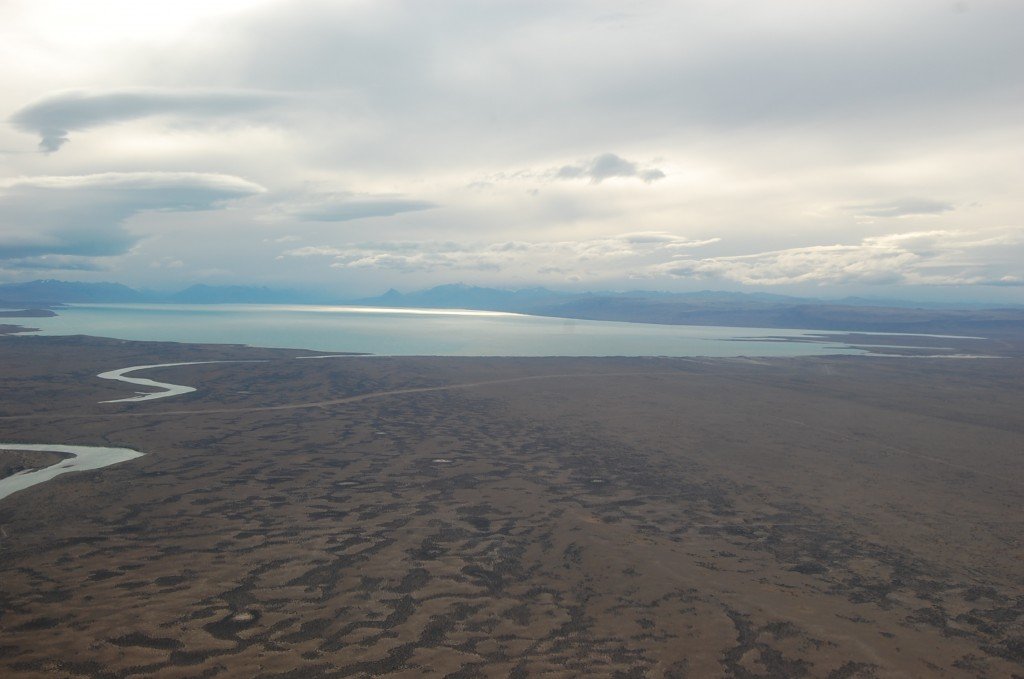
Santa Cruz province represents the most deep and wild Patagonia, the one of the great outdoors, the inmense blue skies, the big clouds and the dusks over the endless steppe. It is the second largest province in Argentina and the one with the lowest population density, with slightly more than one person per Km2.

Logo Ruta 40, Patagonia Argentina

After covering a stretch with only some “estancias” around, Route 40 arrives to the first significant town: Perito Moreno, located just 25 Km away from Buenos Aires Lake. From there you can take an exit that going around the lake takes to the small but interesting village of Los Antiguos, where there are excellent “chacras” (farmhouses) where all kinds of fruit trees and vegetables are grown. From Los Antiguos you can cross to Chile Chico on the other side of the Chilean border; from there you can access the also famous Carretera Austral.


Back on the road the route goes south and, after crossing a badlands area by Estancia Casa de Piedra, you arrive to the town of Bajo Caracoles, a small hamlet that is the access point to the famous “Cueva de las Manos“, one the most ancient artistic expressions of the South American peoples: located in the stunning canyon of Pinturas River the cave features paintings from four different periods of time, from 9,300 to 1,300 year ago. It was declared World Heritage Site by the UNESCO in 1999.


Ruta 40, Santa Cruz, Patagonia Argentina


Route 40 continues in the middle of an absolute solitude. In Las Horquetas there is an exit to visit Perito Moreno National Park, probably the less visited of the country, due to its isolation and harsh weather. After Las Horquetas the road is paved again down to Gobernador Gregores, the next point on the road to refuel or find lodging.


From Gobernador Gregores to Tres Lagos the road goes by a long straight, which is still unpaved (although the works are in progress), passing by Estancia la Siberia, beside Cardiel Lake. South of the lake the dirt road covers an enormous plateau where big herds of guanacos wander. In Tres Lagos, in the middle of a desolate landscape, there is a gas station. From there the road is paved down to the exit to RP 23 that takes to El Chaltén, the Argentina trekking capital, with innumerable attractions for hiking and trekking. Peaks Fitz Roy (3,405 m) and Torre (3,102 m) stand out, attracting mountaineers from all over the world due to their extreme technical difficulty. If the weather conditions are good this part of the route shows majestic landscapes, with the impressive Fitz Roy massif and Viedma Glacier, both within Los Glaciares National Park, visible from Viedma Lake.


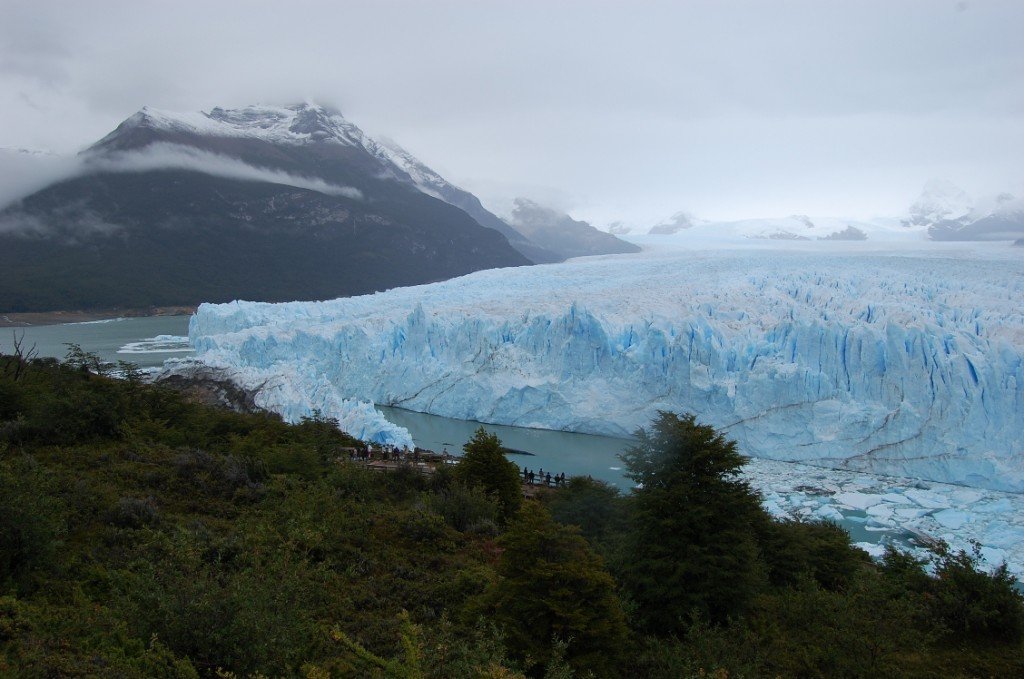
Route 40 continues crossing La Leona River and going around Viedma and Argentino lakes down to the next exit that takes to the town of El Calafate. Located by the immense Argentino Lake it is the touristic services base to visit the most impressive glacier in the world, the Perito Moreno, the forefront of the Southern Patagonian Ice Field, the world’s largest extrapolar ice field accessible by land.


Glaciar Perito Moreno, Santa Cruz, Patagonia Argentina


Taking up again Route 40 direction south the next stage shows spectacular views of Torres del Paine in Chile, arriving then to Río Turbio, a small mining village located in a lovely valley but with limited options for lodging and eating. The neighbor Chilean town of Puerto Natales is just a few kilometers away.


From there Route 40 turns direction southeast to almost touch the Chilean border which is on parallel 52⁰ South. Then it continues down to Río Gallegos, the southernmost city in continental Argentina and capital of Santa Cruz province; it was a pioneers village just three generations ago. From there you can go on to reach Cape Vírgenes, and exceptional culmination of Route 40, the southernmost location in the continental part of Argentina and east frontier of the Strait of Magellan. The place has a lovely lighthouse, a museum and an opportune tea room. There, it is also the Cabo Vírgenes Natural Reserve, that can be visited from September to April and hosts one of the biggest penguin reserves in Patagonia, with more than 250,000 Magellanic Penguins.


We hope having excited your imagination with this description of Ruta 40, and that soon you will want to come and see all these wonders with your own eyes, as well as living the experience of travelling around of the most remote and virgin places on earth.


You can book your travel through Ruta 40 in Patagonia with us, by visiting our routes section or getting in touch with us here.


6 Comments for Ruta 40, Patagonia


My Homepage

… [Trackback]…

[…] Read More: tierraspatagonicas.com/en/ruta-40-patagonia/ […]…

Reply

louis vuitton outlet

Hey. Very nice blog!! Guy .. Beautiful .. Wonderful .. I will bookmark your website and take the feeds additionally

Reply

4x4 tour the lakes Lolog, Curruhue & Epulafquen | Patagonian Lands

[…] landscape that, going by the Curruhue River goes down to the National Route 234 (now part of the Route 40), that goes from Junín to San Martín de los […]

Reply

At Home with the Patagonians, by George Chaworth Musters | Patagonian Lands

[…] mountain range, by the paths that the Tehuelches, which now almost coincide with the course of the Route 40. […]

Reply

Perito Moreno National Park | Patagonian Lands

[…] get to the park you have to take the Route 40, if coming from the north by the town of Perito Moreno, that is 240 Km north, or from the South […]

Reply

Down by the Malleo River | Patagonian Lands

[…] in the San Martín de los Andes meadow, and then we took the National Route 234, now renamed as Route 40, heading to Junín de los Andes. We used two vehicles, a Toyota Hilux 4×4 truck and an old […]

Reply


Wanna say something?


  Cancel Reply

  • CONTACT

    info@tierraspatagonicas.com

    Phone: +54 2972 413 786
    Cel: +549 2944 710 762

    San Martín de los Andes
    Patagonia Argentina

  • VIDEOS

  • Photos

    • ANDEAN PATAGONIA
    • SOUTHERN PATAGONIA
    • ATLANTIC PATAGONIA
    • BIRDWATCHING PHOTOGRAPHY
  • Recent Posts

    • Birds of Patagonia: Patagonian Sierra-Finch
      (Phrygilus patagonicus) The Patagonian Sierra-Finch is an endemic species of Patagonia...
    • Pillan Mahuiza Geopark
      Pillán Mahuiza Geopark, in San Martín de los Andes, Patagonia, Argentina, spans...
    • Birds of Patagonia: Silvery Grebe
      (Podiceps occipitalis) This sublime diver and swimmer is found in almost all Argentina,...
  • Popular Posts

    • The Andean-Patagonian Forest
      The Andean-Patagonian forests, also known as Subantarctic forests, spreads over steep...
    • Ruta 40, North and Cuyo Sectors
      Ruta 40 ("Route 40"), or National Route 40 is the longest and most spectacular road...
    • A Tour to The Marble Chapels
      The "Marble Chapels", in General Carrera Lake, Chile, are mineral formations made...

  • Categories

    Antrophology Birdwatching Books Fauna Fungi Geology History Lakes & Rivers Mountains National Parks Native People Paleontology Plants Route 40 Tours Uncategorized Volcanoes